Can My Hardwood Floors Be Refinished? What Can—and Should—Be Sanded
October 30, 2026
Hardwood flooring has a remarkable advantage over many other flooring materials: a worn surface can sometimes be restored rather than replaced.
Scratches, dull finishes, discoloration and decades of foot traffic don't necessarily mean the floor has reached the end of its useful life.
But not every floor that looks like hardwood can be sanded. And not every genuine wood floor has enough usable material remaining to make refinishing a good idea.
Some solid hardwood floors can be refinished several times. Some engineered hardwood floors can be refinished once. Others should never be sanded to bare wood.
There are also floors that technically can be sanded but have moisture problems, movement or damage that should be addressed first.
The question isn't simply whether a floor is made of wood. It's whether its construction, condition and remaining usable wood make refinishing practical.
Here's how to find out.
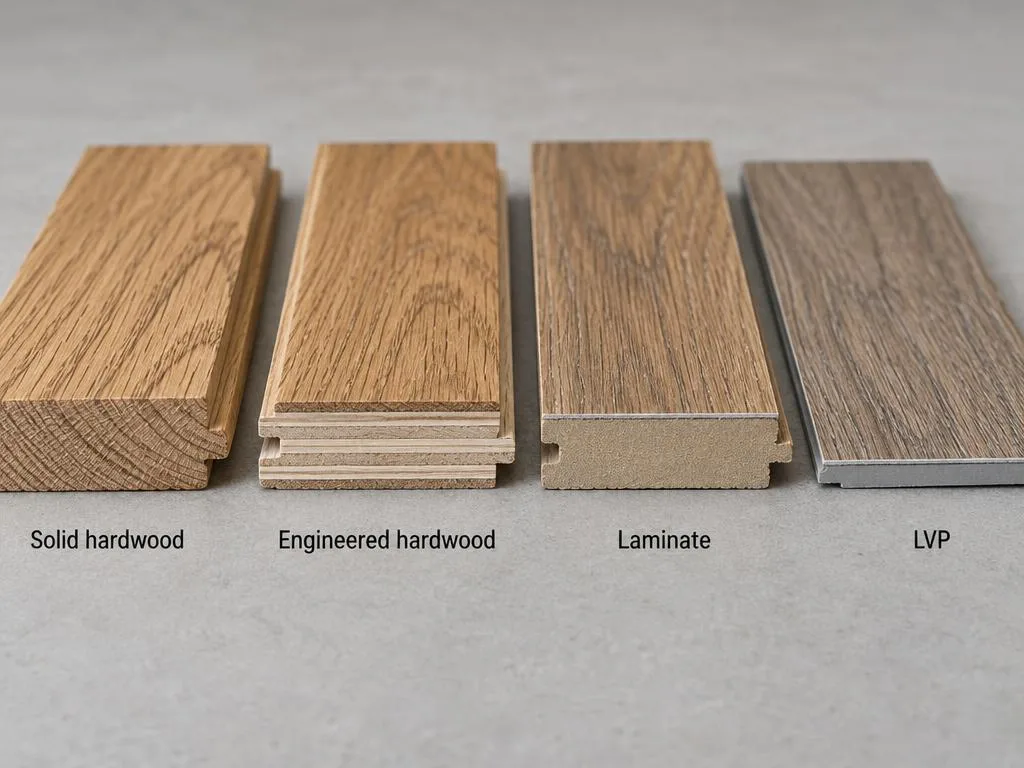
1. First, Identify What Kind of Flooring You Have
Before considering sanding equipment, stains or finishes, determine exactly what flooring is installed.
Several products can look nearly identical from above.
Solid Hardwood
Solid hardwood planks are made from solid wood throughout their thickness.
Traditional solid hardwood often uses tongue-and-groove construction and is nailed or stapled to a wood subfloor.
Because the plank consists of solid wood, it may contain enough usable material above the tongue-and-groove joint to allow multiple refinishing cycles.
However, its original thickness does not tell you how much usable wood remains today.
Engineered Hardwood
Engineered hardwood has a real wood surface layer bonded to a constructed core.
The core may consist of plywood, high-density fiberboard or another engineered material, depending on the product.
The visible wood layer can range from a very thin veneer to a substantially thicker sawn wood layer.
That thickness is critical when evaluating refinishing possibilities.
Laminate Flooring
Laminate typically has a printed decorative image protected by a wear layer over a manufactured core.
Even when it convincingly resembles oak, walnut or another hardwood, the visible surface is not a thick layer of natural wood.
Laminate cannot be conventionally sanded and refinished like hardwood.
Luxury Vinyl Plank
LVP may reproduce wood grain and texture, but it is a resilient flooring product rather than natural hardwood.
Sanding removes or damages its manufactured wear surface.
LVP cannot be sanded and refinished as hardwood.
Bamboo Flooring
Bamboo flooring comes in several constructions, including solid-style, engineered and strand-woven products.
Although bamboo is a grass rather than a botanical hardwood, it is often sold alongside hardwood flooring.
Refinishing suitability varies substantially by construction, wear layer and manufacturer.
How to Identify Your Existing Floor
Useful places to inspect include:
- An exposed plank edge at a floor register
- A doorway threshold
- The edge of a stair tread
- An accessible area beneath removed trim
- Leftover flooring stored from the original installation
- Original product packaging or installation records
A cross-section is much more informative than the appearance of the finished surface.
2. Solid Hardwood: Usually Refinishable, but Not Indefinitely
Traditional solid hardwood is often an excellent candidate for sanding and refinishing.
The sanding process removes the existing finish and a small amount of wood, creating a fresh surface for staining or coating.
But every sanding removes material.
The Tongue-and-Groove Limitation
Many solid hardwood floors use tongue-and-groove joints.
The usable sanding surface is the wood above the upper portion of the joint—not the entire thickness of the plank.
As a floor is sanded repeatedly, that usable layer becomes thinner.
Eventually, further sanding may expose fasteners, weaken the upper groove edge or create other problems.
How Many Times Can Solid Hardwood Be Refinished?
There is no universal number.
The answer depends on:
- Original plank thickness and construction
- Amount of wood above the tongue-and-groove joint
- Previous sanding history
- Depth of existing damage
- Floor flatness
- Sanding technique
- Condition of the boards
A traditional solid hardwood floor with substantial usable wood may support several refinishing cycles.
An older floor that has already been aggressively sanded may have very little usable material remaining.
Signs a Solid Hardwood Floor May Be Too Thin
Look for exposed nail heads, splitting along the edges of boards, weakened groove edges and evidence of previous heavy sanding.
These conditions don't automatically establish that the entire floor must be replaced, but they change the refinishing decision.
3. Engineered Hardwood: The Wear Layer Determines the Possibilities
Engineered hardwood is real wood flooring, but its construction limits how much sanding it can tolerate.
The critical measurement is the thickness of the real wood wear layer.
A floor with a very thin veneer is fundamentally different from one with a thick sawn hardwood surface.
Thin Veneer Engineered Hardwood
Some engineered products have a real wood surface layer thinner than 1 millimeter.
These floors are generally unsuitable for conventional sanding to bare wood.
Attempting to remove the factory finish and surface damage may sand through the veneer and expose the core beneath it.
Once that happens, the original wood appearance cannot simply be restored with stain.
Thicker Wear Layers
Some engineered hardwood products have substantially thicker wood layers.
Depending on the construction, condition and manufacturer's instructions, they may permit limited sanding and refinishing.
A 3 mm wear layer, for example, offers more potential than a 0.6 mm veneer, but thickness alone does not guarantee that sanding is appropriate.
The amount of material that must be removed, previous refinishing and the remaining safe thickness all matter.
Can Engineered Hardwood Be Refinished More Than Once?
Some premium engineered products with sufficiently thick wear layers may permit more than one refinishing under suitable conditions.
Many others permit one or none.
Never assume that an engineered floor can be sanded simply because its surface is genuine wood.
4. Prefinished Hardwood: Special Considerations
Prefinished hardwood receives its surface coating at the factory rather than after installation.
Many factory finishes are highly durable and may include aluminum-oxide or other wear-resistant technologies.
That durability can make the existing finish difficult to remove.
Prefinished flooring may also have beveled edges, textured surfaces or specialized coatings that complicate sanding.
Prefinished Solid Hardwood
A prefinished solid hardwood floor may contain enough usable wood for refinishing.
Its actual sanding capacity depends on its construction and remaining material, not simply on the fact that it was factory finished.
Prefinished Engineered Hardwood
Prefinished engineered hardwood requires particular caution.
Some products have only a thin wood veneer and should not be conventionally sanded.
Others have enough wood for a single careful refinishing.
A smaller group of thick-wear-layer engineered products may permit additional refinishing, depending on manufacturer guidance.
Why One Sanding May Be the Practical Limit
Even when a prefinished engineered floor can be sanded, removing the factory finish, correcting surface wear and addressing beveled edges may consume a meaningful portion of the available wood.
For many products, one refinishing is the practical maximum.
It is not technically accurate, however, to apply that limit to every prefinished solid hardwood floor.
Beveled Edges
Many prefinished floors have slight bevels between boards.
Sanding the surface flat may reduce or remove these bevels, changing the floor's appearance.
Deep bevels may retain old finish or discoloration unless additional material is removed.
That creates another limitation when the available wood is thin.
Wire-Brushed and Hand-Scraped Surfaces
Some factory-finished hardwood has intentionally textured surfaces.
Conventional sanding may remove the texture and leave a substantially different appearance.
Reproducing the original factory texture may not be practical.
5. The Wood Species Also Matters
Not all hardwoods sand, stain and finish the same way.
Oak, maple, walnut, cherry, hickory and other species have different grain patterns, hardness, natural colors and staining characteristics.
Oak generally offers considerable staining flexibility.
Maple can be more difficult to stain evenly, especially in darker colors.
Walnut is often valued for its naturally rich brown color, while cherry can undergo substantial color changes with age and sunlight.
Hardness also affects dent resistance, although it does not determine whether a floor is refinishable.
For a detailed comparison of hardwood species, natural colors, Janka hardness and durability, read our companion guide:
Hardwood Flooring Species Compared: Color, Hardness, Durability and Appearance
Understanding the species helps establish what appearance may be achievable after refinishing.
6. What Sanding Can Fix—and What It Can't
Sanding removes material from the wood surface.
That makes it effective for some problems and ineffective for others.
Worn or Dull Finish
A worn surface coating is one of the most common reasons homeowners consider refinishing.
If the floor has enough usable wood and is otherwise sound, sanding can remove the old finish and prepare the surface for a new coating.
However, a floor with finish wear but little underlying wood damage may be a candidate for a less invasive maintenance recoat.
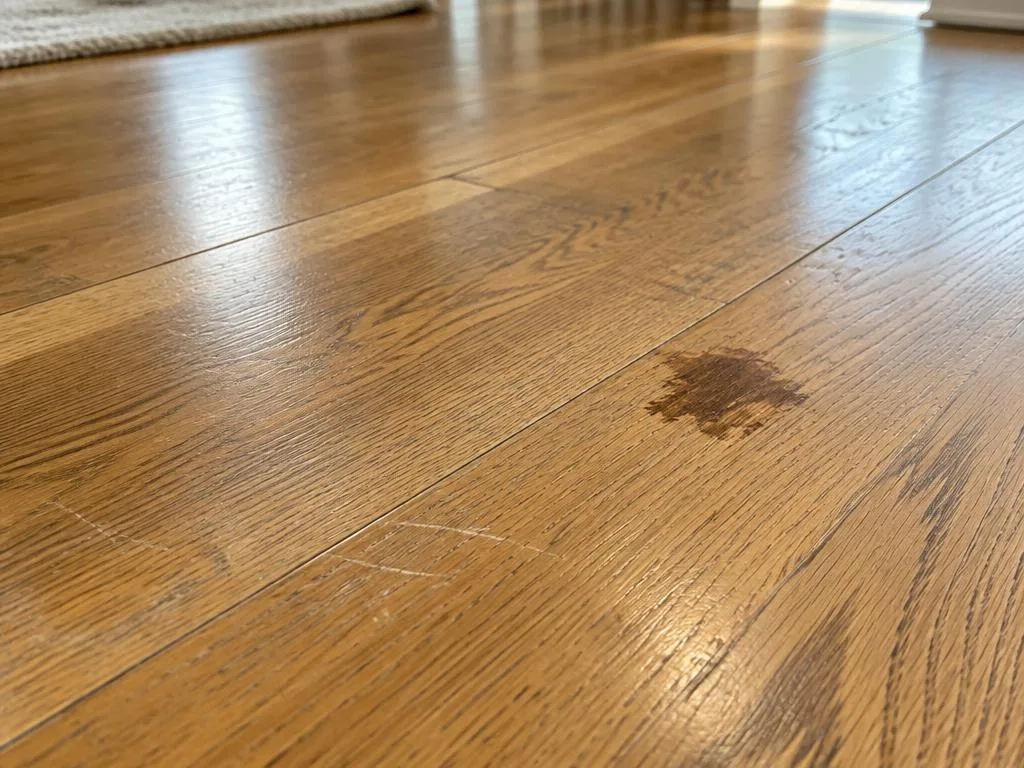
Surface Scratches
Shallow scratches in the finish or upper wood surface can often be removed during sanding.
Deep scratches may require removing considerably more material than expected.
Dents and Gouges
A shallow dent may be reduced through sanding, but a deep dent cannot always be eliminated without removing excessive surrounding wood.
Some localized damage may be better addressed through selective repair.
Dark Pet Stains
Pet urine can penetrate wood and create dark discoloration.
If staining extends deeply into the wood, sanding may not remove it.
The damaged boards may need treatment or replacement, and odor problems may extend into the subfloor.
Water Stains
Some superficial discoloration can be reduced or removed.
Deep staining, swelling, delamination and structural deterioration are different problems.
Sanding cannot restore wood that has lost its structural integrity.
Sun Fading and Color Differences
Areas beneath rugs or furniture may differ from exposed areas.
Sanding can remove surface finish and some discoloration, but species-specific color changes may extend into the wood.
The finished floor may not become perfectly uniform.
Gaps Between Boards
Seasonal gaps are often caused by changes in wood moisture content.
Sanding does not stop expansion and contraction.
Filling gaps while the wood is seasonally contracted can create problems when the boards expand again.
7. Screen and Recoat Versus Full Sanding
Not every hardwood floor needs to be sanded down to bare wood.
Two procedures are commonly confused.
Screen and Recoat
A screen-and-recoat, sometimes called a maintenance coat, lightly abrades or otherwise prepares the existing finish so another compatible coat can bond to it.
The goal is to renew the protective coating without removing substantial wood.
It can be useful when:
- The existing finish is worn or dull
- Scratches are primarily in the coating
- The finish is still adequately bonded
- The surface is compatible with the proposed coating
- The homeowner wants to preserve the existing color
A screen-and-recoat generally does not remove deep scratches, significant stains or damage that extends into the wood.
Full Sanding and Refinishing
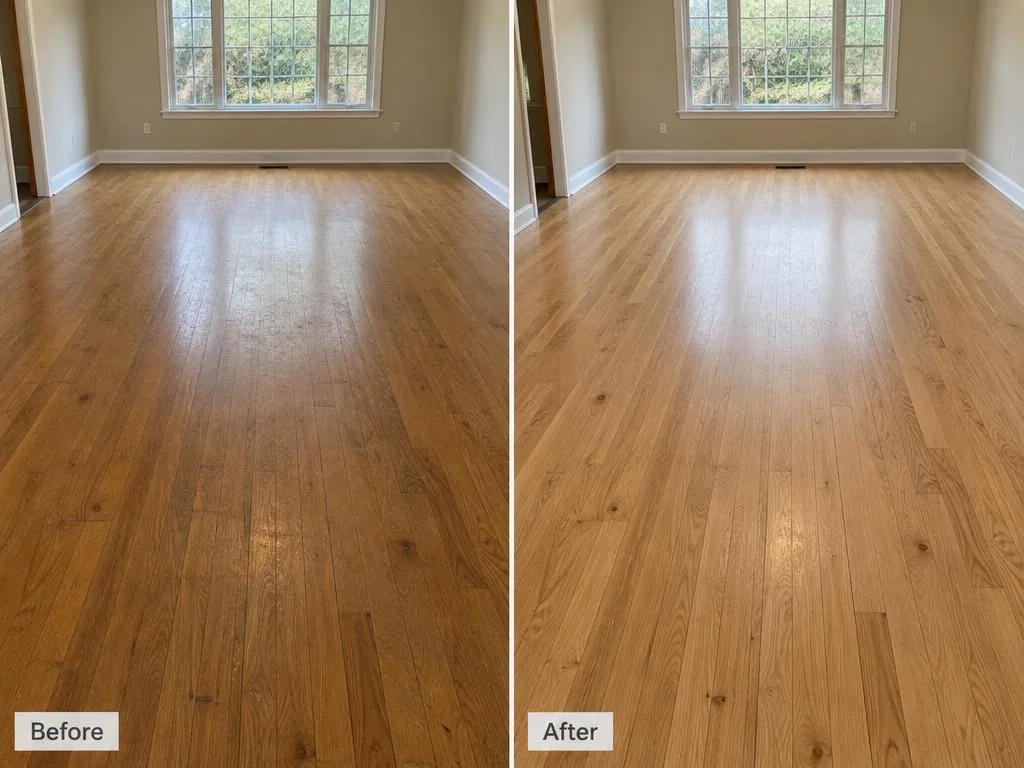
Full refinishing removes the existing finish and sands the wood surface sufficiently to prepare it for a new finish system.
It may also allow the floor's color to be changed.
This process removes more material and is more demanding.
Finish Compatibility Matters
Some floors have contamination from waxes, oils, polishes, silicone-containing products or previous maintenance treatments.
These substances can interfere with coating adhesion.
A test area or other appropriate evaluation may be needed before recoating.
Factory finishes also require compatible preparation and coating systems.
A floor that looks like a good candidate for recoating may not be suitable if the existing finish cannot provide reliable adhesion.
8. When Hardwood Should Not Be Sanded—At Least Not Yet
Some floors have conditions that must be understood before refinishing.
Active Moisture Problems
Wood flooring changes dimensions as it gains or loses moisture.
Sanding a floor while a moisture problem remains unresolved can produce poor results and may worsen the eventual appearance.
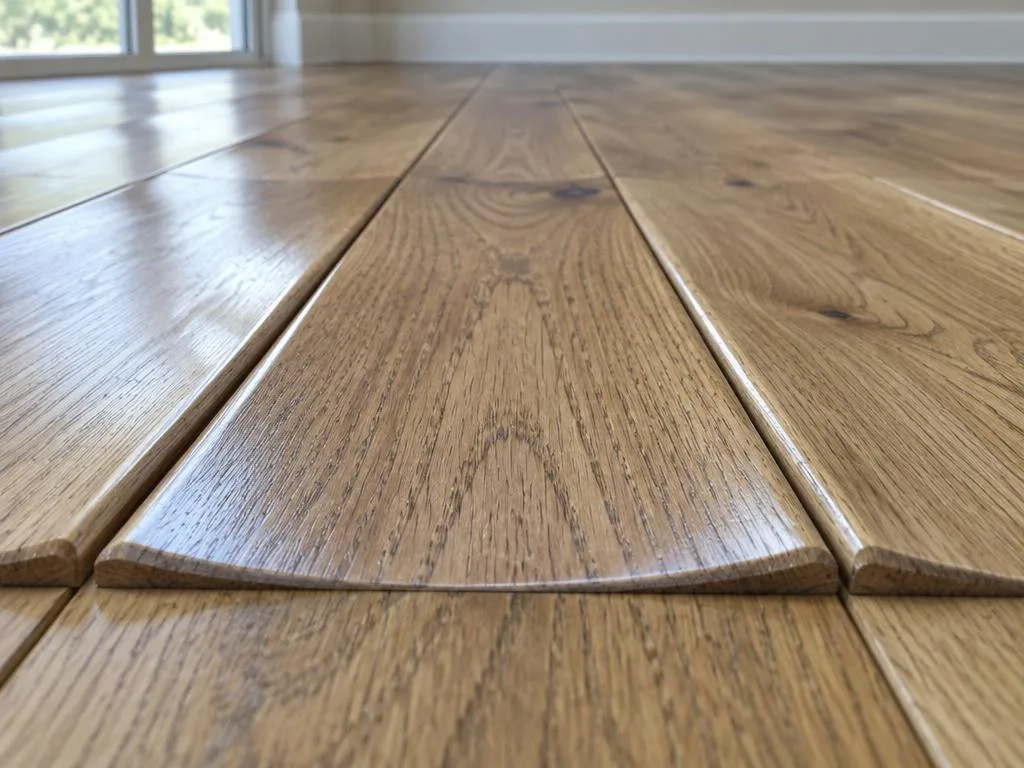
Cupping
Cupping occurs when the edges of boards are higher than their centers.
It commonly reflects a moisture imbalance through the thickness of the boards.
Sanding a cupped floor flat before moisture conditions stabilize can lead to a crowned appearance when the boards return toward their original shape.
Crowning
Crowning occurs when the center of a board is higher than its edges.
It can have several causes, including moisture-related conditions and previous sanding performed before a floor stabilized.
Buckling
Buckling occurs when flooring lifts substantially from its substrate.
This is not a cosmetic defect that ordinary sanding can correct.
Loose or Moving Boards
Boards that move excessively, are inadequately fastened or have deteriorated joints may require repair before refinishing.
Delamination
Engineered hardwood can sometimes separate between layers.
Sanding does not restore a failed bond between the wear layer and the core.
Excessively Thin Wood
A floor with insufficient remaining usable wood may be damaged by further sanding.
9. Colorado's Dry Climate and Hardwood Refinishing
Colorado's Front Range climate can complicate decisions about hardwood flooring.
During the heating season, indoor air can become very dry.
As hardwood loses moisture, boards may shrink and gaps can appear.
When indoor humidity increases, the boards may expand again.
Seasonal Gaps
Gaps that appear in winter and diminish during more humid periods may reflect normal seasonal movement.
Filling every winter gap with a rigid material can create problems when the floor expands.
Moisture Balance
A floor should be evaluated for moisture conditions before sanding.
The wood, subfloor and indoor environment all matter.
A single moisture reading may not explain the history or cause of a problem.
Colorado Sunlight
Strong sunlight can change hardwood color over time.
Species such as cherry and walnut may show noticeable differences between exposed areas and areas covered by rugs.
Refinishing may improve consistency, but it cannot guarantee that all natural color differences disappear.
Stable Conditions Before Refinishing
Indoor conditions should be within the applicable flooring and finish manufacturers' requirements.
If a floor has recently experienced flooding, leaks, unusual humidity or significant movement, its condition may change as moisture levels stabilize.
The correct refinishing decision may be different after those conditions are resolved.
10. Can Hardwood Be Refinished a Different Color?
Often, yes.
Sanding can remove an existing stain and finish, exposing wood that may accept a new color.
But the range of achievable colors depends on the species and condition.
Going From Light to Dark
Darkening hardwood is often possible, but staining results vary.
Some woods accept stain more evenly than others.
Going From Dark to Light
Lightening a previously dark-stained floor may be more difficult.
Stain can remain in pores, joints, bevels and other areas.
Removing all traces of the previous color may require more sanding than the floor can safely tolerate.
Natural Undertones
Red oak has naturally warm undertones.
White oak tends toward more neutral tones.
Maple is typically pale, while walnut is naturally dark.
A stain cannot completely eliminate the underlying characteristics of the species.
Test Samples
A sample area using the actual floor and intended finish system is more informative than choosing a stain color from a printed chart.
The final appearance depends on the wood, sanding sequence, stain application and topcoat.
11. What Equipment Is Used to Refinish Hardwood Floors?
Full refinishing typically requires specialized equipment.
Drum and Belt Sanders
Large floor sanders remove old finish and wood from broad areas.
They can remove material efficiently, but incorrect operation can create deep gouges, waves or uneven sanding.
Edge Sanders
Edge sanders reach areas near walls and other locations that large floor machines cannot access.
Blending the edges with the main floor requires care.
Buffers and Orbital Machines
Buffers and orbital sanding equipment may be used for finish abrasion, intermediate sanding and certain refinishing systems.
They are not necessarily substitutes for more aggressive sanding equipment.
Dust Collection
Wood sanding produces substantial fine dust.
Suitable dust extraction and containment help reduce airborne dust and cleanup requirements.
Wood dust also presents respiratory and combustible-dust hazards.
Abrasives
Refinishing generally uses a progression of abrasive grits.
Skipping important steps or using an inappropriate sequence can leave visible sanding scratches beneath the new finish.
Stains and Finishes
Finishing may require applicators, compatible stains, sealers, waterborne or oil-based coatings and appropriate ventilation.
Product instructions govern application conditions, drying and curing.
Some finishes have significant odor, flammability or exposure considerations.
Rental Equipment
Floor sanders, edgers and buffers are available from some equipment rental companies.
However, renting the machines is only one part of the process.
Equipment setup, abrasive selection, sanding technique, dust control and finish application all influence the result.
12. How to Inspect Your Own Hardwood Floors
A preliminary inspection can help narrow the possibilities.
Step 1: Identify the Flooring Construction
Determine whether the floor is solid hardwood, engineered hardwood or another material.
Step 2: Look for an Exposed Cross-Section
A floor register or threshold may reveal plank thickness and construction.
Step 3: Assess the Remaining Wood
For solid hardwood, consider the usable wood above the tongue-and-groove joint.
For engineered hardwood, identify the real wood wear-layer thickness.
If the construction cannot be established, avoid assuming sanding is safe.
Step 4: Check for Previous Sanding
Look for unusually thin boards, exposed fasteners, damaged edges or other signs of substantial material removal.
Step 5: Inspect Moisture and Movement
Look for cupping, crowning, buckling, gaps, loose boards and water damage.
Step 6: Identify the Type of Surface Damage
Separate worn finish from deep scratches, gouges, stains and damaged boards.
Step 7: Consider the Desired Result
A homeowner who wants to renew the existing finish may have different options from someone who wants to change a dark floor to a very light color.
Step 8: Evaluate the Whole Floor
One damaged board does not necessarily mean the entire floor must be replaced.
Likewise, one attractive section doesn't prove the rest of the floor is suitable for sanding.
13. Selective Board Replacement: An Often-Overlooked Option
Sometimes the best solution isn't refinishing everything or replacing everything.
Individual damaged boards may be replaceable.
This can be useful when a floor has localized pet stains, water damage, deep gouges or other isolated problems.
Matching the Existing Wood
Replacement boards should be evaluated for species, dimensions, grain, grade and construction.
Matching an older floor can be challenging because wood changes color over time.
Matching the Finish
A replacement board may look different even when the species is correct.
The existing finish, aging and sunlight exposure affect the appearance.
In some situations, replacing damaged boards before refinishing the surrounding floor can produce a more consistent result.
When Repairs Become Impractical
If damage is widespread, suitable replacement material is unavailable or the remaining floor is too thin, selective repair may not be economical.
14. Refinishing Versus Replacing Hardwood
Refinishing and replacement solve different problems.
Refinishing preserves the existing floor and renews its surface.
Replacement allows the homeowner to change the material, construction, plank width, species or overall appearance.
Refinishing May Make Sense When:
- The floor is genuine hardwood with sufficient usable wood
- The substrate and boards are stable
- Moisture conditions are acceptable
- Most damage is limited to the surface
- The desired appearance is achievable
- The existing flooring remains structurally sound
Replacement May Make More Sense When:
- The wood surface is too thin
- Engineered layers are delaminating
- Water damage is extensive
- Boards are severely damaged or unstable
- The desired appearance cannot reasonably be achieved
- Repair and refinishing costs approach the cost of a suitable replacement
The comparison should include more than the price of sanding versus new flooring.
Furniture moving, temporary loss of room access, dust control, finish curing, damaged-board replacement and other preparation work may affect the project.
How Long Does Refinishing Take?
The duration depends on floor area, condition, repairs, sanding requirements and finish system.
Drying between coats is not the same as full curing.
Some finishes permit light foot traffic relatively quickly but require additional time before rugs, furniture or normal use.
Follow the specific finish manufacturer's instructions.
15. Hardwood Refinishing Decision Guide
| Floor condition | Likely direction |
|---|---|
| Solid hardwood, adequate thickness, surface wear | Full refinishing may be suitable |
| Solid hardwood, sound finish, light scratches | Screen and recoat may be suitable |
| Engineered hardwood, very thin veneer | Avoid conventional sanding |
| Engineered hardwood, substantial wear layer | Evaluate limited refinishing |
| Prefinished engineered hardwood | Verify wear layer and manufacturer limits |
| Laminate or LVP | Not conventionally refinishable |
| Active cupping or moisture problem | Investigate and stabilize before sanding |
| Isolated deeply stained boards | Consider selective board replacement |
| Widespread delamination or severe damage | Replacement may be more practical |
| Excessively thin solid hardwood | Further sanding may be unsafe |
This table is a starting point, not a substitute for examining the actual floor.
Frequently Asked Questions
How many times can solid hardwood floors be refinished?
It depends on the original construction, previous sanding and remaining usable wood. Some traditional solid hardwood floors can be refinished several times, while others have little material left.
Can engineered hardwood floors be sanded?
Some can. Others have wear layers too thin for conventional sanding. The construction and manufacturer's instructions determine suitability.
Can prefinished hardwood be refinished?
Sometimes. Prefinished solid hardwood may allow refinishing, while many prefinished engineered products allow only one sanding or none. Factory finishes, bevels and textures complicate the process.
Can hardwood floors be refinished without sanding?
Some floors can receive a compatible maintenance recoat with light surface preparation rather than full sanding to bare wood. This doesn't correct deep damage or change the underlying wood color.
Will refinishing remove deep scratches?
It may reduce or remove some scratches, but deep damage can require excessive material removal or localized repair.
Can refinishing remove pet urine stains?
Not always. Deep staining may penetrate too far into the wood, and damaged boards or subfloor materials may need replacement.
Can dark hardwood floors be refinished lighter?
Often, but results depend on the species, previous stain penetration, remaining wood and desired color.
Can cupped hardwood floors be sanded flat?
Sanding before moisture conditions stabilize can create additional problems. The cause of cupping should be evaluated first.
Can factory-finished hardwood be screened and recoated?
Some factory finishes can be recoated using compatible preparation and coating systems. Adhesion and product compatibility must be established.
Is refinishing hardwood dusty?
Sanding produces wood dust. Suitable dust extraction and containment can substantially reduce its spread, but the process should not be assumed completely dust-free.
Can damaged hardwood boards be replaced individually?
Often, depending on the flooring construction, installation method and availability of matching material.
Does hardwood species affect refinishing?
Yes. Species influence hardness, grain, natural color and staining behavior. See our Hardwood Flooring Species Guide for a detailed comparison.
How long before furniture can go back after refinishing?
That depends on the finish system. Light foot traffic, furniture replacement, rugs and full curing may have different waiting periods.
Is it cheaper to refinish or replace hardwood?
Refinishing can be less expensive when the existing floor is sound, but extensive repairs, difficult finishes or limited wear layers may change the economics.
The Bottom Line
Hardwood flooring can last for decades, and refinishing is one reason why.
But the ability to refinish a floor depends on much more than its age or appearance.
The floor must have enough usable wood, its construction must permit sanding, and its condition must support a worthwhile result.
Some floors need full sanding. Others may only need a maintenance recoat. Some benefit from selective board replacement. And some have reached the point where further sanding is no longer practical.
Understanding those differences is the first step toward deciding what to do with an existing hardwood floor.
Related Topics
Hardwood Flooring Species Compared: Color, Hardness, Durability and Appearance
Compare oak, maple, hickory, walnut, cherry, ash and other hardwood flooring species. Learn about natural color, Janka hardness, dent resistance, staining and how Colorado's climate affects wood floors.
Questions about your hardwood floors? Call for a Free Estimate.